Bali Traffic Hotspots & Rush Hours: A Scooter Rider's Guide
By the SiapPergi Editorial Team · Published 11 October 2026 · 8 min read
Traffic is one of the main reasons people choose a scooter in Bali: a car can be stuck for an hour in Canggu while a scooter keeps moving. But even a scooter can be held up for a long time if you hit the wrong spot at the wrong time. This guide sums up the common traffic patterns in South Bali and Ubud: where, when, and what you can do about it. These are general patterns based on observation and local news, not official hourly data; daily conditions can change because of temple ceremonies, roadworks or the holiday season.
Why South Bali gets jammed so quickly
South Bali has grown much faster than its roads. Many roads in Canggu, Kerobokan and Seminyak used to be village lanes just wide enough for two cars to pass, and they are hard to widen because houses, temples and rice fields line both sides. On top of that, tourists and workers move at almost the same times: to the office and school in the morning, home from work and to the beach for sunset in the afternoon. One car stopping to drop off passengers, one truck turning around, or one rider cutting into the opposite lane is enough to lock up a junction.
The most complained-about traffic spots
| Area | Problem spots/roads | Busiest times (general pattern) | Notes for scooter riders |
|---|---|---|---|
| Canggu & Berawa | Jalan Raya Canggu, the Canggu shortcut, Simpang Padonan Tibubeneng, Jalan Pantai Berawa and Batu Bolong | Midday to night, peaking 16:00–19:00; very bad during the year-end holidays | Scooters still move but slowly; don't enter the opposite lane |
| Kerobokan | Jalan Raya Kerobokan towards Tanah Lot and Canggu | Mornings 07:00–09:00 and afternoons 16:00–19:00 | The evening commute meets tourist traffic heading to Tanah Lot |
| Kuta | Simpang Dewa Ruci (Simpang Siur), Jalan Raya Kuta, Jalan Legian | Midday and afternoon; Legian busy on weekend nights | Simpang Dewa Ruci links the Bypass, Sunset Road and Kuta |
| Seminyak | Jalan Kayu Aya, Petitenget, Jalan Kerobokan–Seminyak | Late afternoon before sunset into the night | Beach club and restaurant parking narrows the road |
| Airport | Around the Ngurah Rai statue and airport exit roads | Follows arrival times, often afternoon and evening | Taxi and shuttle traffic; see also scooter rental from the airport |
| Ubud | Jalan Raya Ubud, Monkey Forest, Hanoman, the Mas–Peliatan road, Tegallalang | 10:00–17:00 when tour buses and tourist cars arrive | Narrow one-way streets; roadside parking makes it worse |
| Denpasar | Jalan Gatot Subroto, Imam Bonjol, Teuku Umar, Ngurah Rai Bypass at Sanur | Mornings 06:30–08:30 and afternoons 16:00–18:30 | Office and school pattern; quieter at weekends |
| Bukit & Uluwatu | Jalan Raya Uluwatu, around Uluwatu Temple | After sunset and the kecak dance | Hundreds of vehicles leave at once on dark roads |
This list is not an official ranking. Congestion can shift because of new road projects, temporary traffic arrangements or ceremonies at local temples. Treat the table as a risk map, then check live conditions in a map app before you go.
Canggu: the best-known hotspot
Canggu is often called the most congested place in Bali because its main roads are narrow and lined with cafés, villas and shops. Local news reports name Simpang Padonan in Tibubeneng as one of the worst junctions, where traffic from the beach and from Kerobokan fights for space. During the year-end holidays, queues can stretch all the way to Kerobokan. If you're staying in Canggu, the key is not to drive in and out of Canggu in the late afternoon. Area details are on scooter rental Canggu.
Simpang Dewa Ruci and Kuta
Simpang Dewa Ruci, also known as Simpang Siur, is where the Ngurah Rai Bypass, Sunset Road, Jalan Raya Kuta and the road to Nusa Dua meet, with an underpass below. A traffic study on the stretch towards Nusa Dua recorded a poor level of service at the midday peak, partly because of U-turns and vehicles cutting across lanes. For scooter riders, the biggest risk is actually being in the wrong lane: if you're heading to Nusa Dua, get into the correct lane well before the junction and follow the signs. Staying nearby? See scooter rental Kuta.
Ubud: midday jams
Ubud follows a different pattern from South Bali: the peak isn't late afternoon but midday, when tour buses and cars arrive at the market, the palace and the Monkey Forest. Many streets in central Ubud are one-way, so one wrong turn can force a long detour. Leaving Ubud for sightseeing before 09:00 and returning after 17:00 is the most comfortable pattern. The area guide is on scooter rental Ubud.
Daily rush hours: the general pattern
| Time | General conditions | Advice |
|---|---|---|
| 06:00–07:00 | Quiet in almost every area | Best time for long routes and morning photos |
| 07:00–09:00 | Busy in Denpasar, Kerobokan and on roads to schools | Avoid Denpasar routes; head out of town before 07:00 |
| 09:00–11:30 | Moderate; Ubud starts to fill up | Good time to move between areas in South Bali |
| 11:30–15:30 | Moderate to busy at big junctions and in Ubud | Rest, have lunch, or do something indoors |
| 16:00–19:00 | Peak: evening commute plus sunset traffic | Be at your sunset spot before 16:30, or stay at your accommodation |
| 19:00–21:00 | Busy around restaurants, beach clubs and Legian | Choose somewhere to eat near where you're staying |
| After 21:00 | Quieter, except Legian and Canggu at weekends | Watch out for dark roads and tired riders |
Certain days make this pattern much busier: Friday afternoon to Sunday, school holidays, late December to early January, and holy days such as Galungan and Kuningan. On the other hand, during Nyepi (the Balinese Day of Silence) every road is closed for 24 hours. Planning for peak season is covered in scooter rental during Nyepi & holiday season.
Traditional ceremonies can close roads temporarily, especially around temples and banjar (village community halls) on holy days. If you see pecalang (traditional village security) directing traffic, follow their directions. More in ceremonies & road closures in Bali.
7 ways to beat the traffic on a scooter
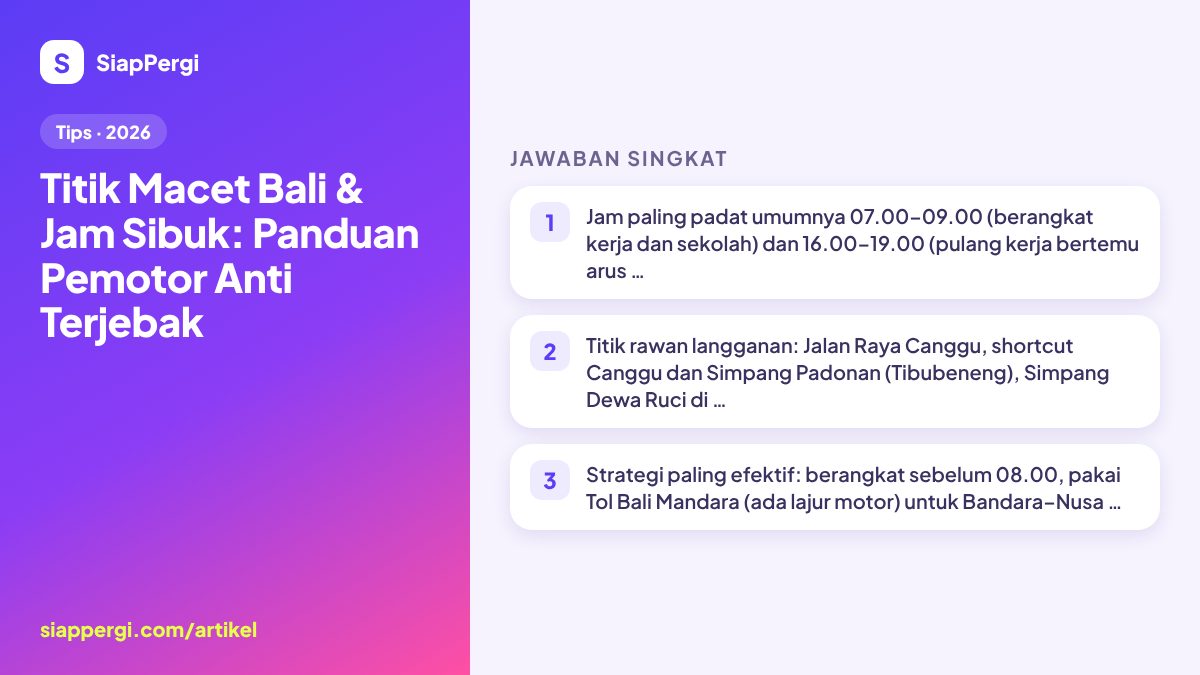
- Leave before 08:00. Starting an hour earlier often saves 30–60 minutes on the road, especially from Canggu, Kuta or Seminyak to Ubud and North Bali.
- Use the Bali Mandara Toll Road. This toll road over the sea connects the airport area, Benoa and Nusa Dua, and has a dedicated motorcycle lane. Sanur to Nusa Dua or Jimbaran is often faster via the toll road than the Bypass. Fees and how to pay are in riding a scooter on the Bali Mandara Toll Road.
- Get to sunset spots early. Arrive before 16:30, then wait 30–45 minutes after the sun goes down before heading home. The queues at Uluwatu, Tanah Lot and Canggu usually clear on their own.
- Check the traffic layer on your map. Dark red in your map app is a sign to wait or detour. Set your route before you ride; tips for navigating on a scooter are in using Google Maps on a scooter.
- Don't trust every back lane. Apps sometimes send you down very narrow, dark rice-field paths or village lanes. Try them in daylight if you're confident; at night, stick to the main roads.
- Choose accommodation to match your plans. If most of your activities are in Ubud, stay in Ubud. Moving hotel once saves far more time than going back and forth between Kuta and Ubud every day.
- Ride a nimble scooter. In traffic, a BeAT, Scoopy or Vario is easier to manoeuvre than a maxi-scooter.
What not to do in a traffic jam
- Ride on the pavement or footpath. Besides being dangerous, it's one of the behaviours locals complain about most, and police can act on it.
- Enter the opposite lane. Local news reports name riders cutting into the opposite lane as one of the causes of severe jams in Canggu, because oncoming traffic gets locked in.
- Squeeze between trucks or buses. Large vehicles have very wide blind spots; stay behind them or keep a clear gap.
- Stop suddenly to check the map. Pull over somewhere safe first, then open your phone.
Conclusion
Bali traffic follows a fairly predictable pattern: mornings on commuter routes, midday in Ubud, afternoons in Canggu, Kerobokan, Seminyak and the sunset rush. By leaving earlier, using the toll road for Airport–Nusa Dua–Sanur, and not heading home right at sunset, you can save a lot of time. A scooter is still the most efficient way through Bali traffic; compare estimated Bali scooter rental prices and pick a nimble bike for busy areas.
Ready to rent a scooter?
See estimated prices by area & model, then book on WhatsApp — the final price is confirmed before you pay.
Frequently asked questions
What time is traffic worst in Bali?
Usually 16:00–19:00, when the evening commute meets tourists heading to and from sunset spots, and 07:00–09:00 on commuter and school routes such as Denpasar and Kerobokan. Weekends and long holidays are worse.
Where are the worst traffic jams in Bali?
The most complained-about are Canggu–Berawa (including Simpang Padonan Tibubeneng and the Canggu shortcut), Jalan Raya Kerobokan, Simpang Dewa Ruci in Kuta, Seminyak–Petitenget, central Ubud at midday, and the Uluwatu road after sunset.
Can scooters use the Bali Mandara Toll Road?
Yes. The Bali Mandara Toll Road has a dedicated motorcycle lane separate from the car lanes. Payment is by electronic money card, so have a card with enough balance before you enter.
How long does it take to ride from Canggu to Ubud?
About 1–1.25 hours without traffic. If you leave in the afternoon or at the weekend, it can take 1.5–2 hours. Leaving before 08:00 is the easiest way to cut the time.
Can I rely on map apps to avoid traffic?
They're quite helpful for spotting red stretches and choosing when to leave. But the alternative routes they suggest are sometimes narrow lanes or unlit rice-field paths, so consider the road conditions and time of day before following them.
This article follows the SiapPergi editorial policy: facts are checked, prices are given as ranges, and mistakes are corrected. Spotted something wrong? Report a correction.