Money Exchange in Bali Airport
By the siappergi.com team · Published · 11 min read · Baca dalam Bahasa Indonesia

Finding a reliable place for money exchange in Bali airport is one of the first tasks most travelers face upon landing at Ngurah Rai International Airport (DPS). While the convenience of exchanging currency immediately after your flight is tempting, understanding the rates, fees, and safety precautions is essential to ensure you get the best value for your Indonesian Rupiah (IDR).
Arriving in Bali is an exhilarating experience, but the transition from the airplane to the tropical warmth of the island often involves a quick logistical hurdle: securing local currency. Whether you are heading straight to your villa in Seminyak or picking up a scooter rental for a coastal adventure, having enough Indonesian Rupiah (IDR) is vital. This guide provides a deep dive into the realities of money exchange in Bali airport, helping you navigate the terminal with confidence.
The Landscape of Currency Exchange at Ngurah Rai (DPS)
When you step out of the arrival gates at Ngurah Rai International Airport, you are immediately met with various options for converting your foreign currency into IDR. It is important to distinguish between the different types of providers available, as the quality of service and the exchange rates vary significantly.
1. Official Bank Branches
2. Authorized Airport Money Changers
3. The 'Convenience' Kiosks
Understanding Exchange Rates and the 'Spread'
To avoid being misled, you must understand how currency exchange works. No one is giving you money for free; the profit for the exchange provider comes from the 'spread.'
What is the Spread?
In the airport, because the overhead costs (rent, security, staffing) are much higher than in a local town, the spread is typically wider. This means you will receive fewer Rupiah per unit of your home currency than you would at a reputable money changer in Denpasar or Kuta.
How to Compare Rates Effectively
- Check the Mid-Market Rate: Before you approach a booth, check the current global rate on your phone.
- Calculate the Difference: If the mid-market rate for 1 USD is 16,000 IDR, and the airport booth offers 15,200 IDR, you are losing 800 IDR per dollar.
- Ask for the Total: Always ask, "If I give you [Amount], exactly how many Rupiah will I receive?" Do not rely on mental math during a high-pressure transaction.
Safety Checklist: How to Avoid Common Scams
While most money changers in Bali are legitimate, the high volume of tourists makes the airport a target for opportunistic scams. Being vigilant is your best defense.
The 'Counting Error' Tactic
The 'Too Good to Be True' Rate
The 'Hidden Fee' Trap
Verification Checklist for Travelers
The ATM Alternative: Is it Better?
For many travelers, using an Automated Teller Machine (ATM) is a faster and often more cost-effective way to get cash than traditional money exchange in Bali airport.
Using ATMs Safely
Pros of ATMs: - Better Rates: ATMs typically use the interbank exchange rate, which is much closer to the mid-market rate than a kiosk's rate. - Speed: It is much faster than waiting in line for a teller.
Cons of ATMs: - Withdrawal Limits: Indonesian ATMs often have a limit per transaction (usually between 2,000,000 and 5,000,000 IDR). - Foreign Transaction Fees: Your home bank will likely charge you a fee for international withdrawals. Check your bank's policy beforehand. - Security Risks: Always cover your PIN and use ATMs located inside the bank branches or in well-lit, monitored areas of the airport.
| Feature | Airport Money Changer | Bank Branch | ATM |
|---|---|---|---|
| Exchange Rate | Low (High Spread) | Moderate | High (Best) |
| Convenience | High | Moderate | High |
| Safety | Variable | Very High | High (if careful) |
| Speed | Moderate | Slow | Fast |
Understanding Indonesian Rupiah (IDR) Denominations
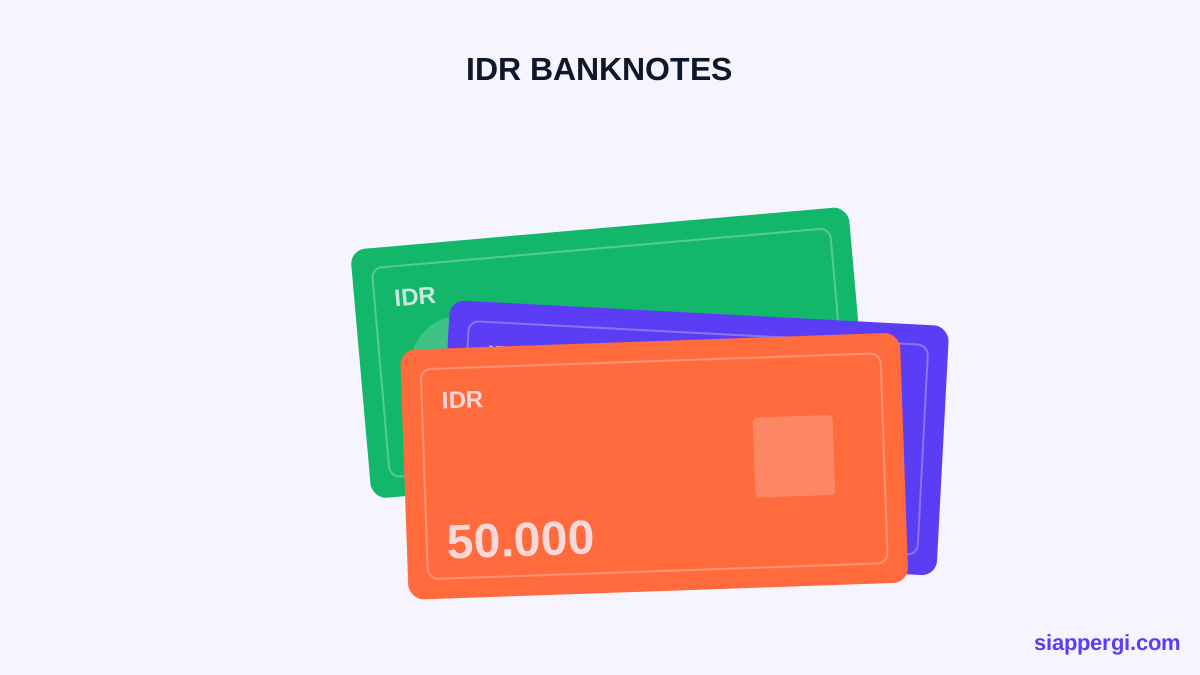
Once you have completed your money exchange in Bali airport, you will likely be holding a variety of colorful banknotes. It is helpful to know what to expect.
Common Banknote Values
Pro-Tip: When you first arrive, try to get a mix of denominations. Having a few 10,000 and 20,000 IDR notes in your pocket will make your first taxi or snack purchase much smoother.
How SiapPergi Simplifies Your Bali Arrival
At SiapPergi, we know that managing your finances and logistics can be stressful when you first land. While we do not provide money exchange services, we aim to make your transportation arrangements as transparent and easy as possible so you can focus on enjoying your holiday.
If you have booked a car rental or a scooter rental with us, you don't need to worry about complex online transfers or upfront payments. We offer free delivery to Ngurah Rai Airport, and you simply pay the catalogue price in Indonesian Rupiah (IDR) when our team meets you at the arrival hall. This 'pay on delivery' model ensures you only need to exchange enough cash for your immediate needs and your vehicle, without the stress of pre-paying for transport online.
For more information on how to manage your booking, you can visit our how to book page. Our team is available via WhatsApp from 07.00 to 23.00 WITA to assist with any questions regarding your arrival.
The "Smart Arrival" Workflow: A Step-by-Step Plan
To minimize stress and maximize your budget, it is best to approach your arrival at Ngurah Rai International Airport with a structured plan. Most travelers find that a "staged" approach to currency exchange works best.
- The Immediate Phase (Arrival Hall): Upon exiting the customs area, your priority is securing enough IDR for immediate, small-scale expenses. This includes airport transport, a local SIM card, or a quick meal. Do not attempt to exchange your entire trip's budget here. Use one of the official, well-lit money changer kiosks in the arrival hall for a small amount (e.g., $50–$100 USD equivalent).
- The Transition Phase (Transport): Once you have a small amount of cash, you can proceed to your accommodation. If you have pre-arranged a vehicle or are heading to your hotel in Kuta, Seminyak, or Sanur, you will likely need cash for small tips or immediate local needs.
- The Bulk Phase (Local Authorized Changers): Once you are settled in your villa or hotel, locate an authorized, reputable money changer in your local area (such as Denpasar, Seminyak, or Ubud). These establishments typically offer much more competitive rates than the airport. This is when you should exchange the larger portion of your travel funds.
Comparison: Airport Exchange vs. Local Money Changers
When deciding where to exchange your money, consider the following trade-offs between the convenience of the airport and the value of local businesses.
| Feature | Airport Money Changers | Authorized Local Changers |
|---|---|---|
| Exchange Rate | Generally lower (higher spread) | More competitive/better value |
| Convenience | Extremely high (immediate) | Requires travel to your area |
| Security | Very high (monitored/official) | High (if using licensed booths) |
| Best Use Case | Small amounts for immediate needs | Bulk currency for your entire stay |
Common Mistakes and How to Avoid Them
Even experienced travelers can fall victim to simple errors when handling large amounts of currency. Avoid these common pitfalls:
* Exchanging Too Much at Once: The most frequent mistake is exchanging your entire trip budget at the airport. Because airport rates are optimized for convenience rather than value, you may lose a significant percentage of your total budget to the "spread." * Ignoring Banknote Condition: In Indonesia, the physical condition of your banknotes matters. Some local vendors, small shops, or even certain transport services may be hesitant to accept IDR notes that are heavily torn, taped, or excessively worn. When exchanging your foreign currency, ensure the IDR notes you receive are crisp and intact. * Failing to Double-Check the Count: Always count your money in front of the teller before leaving the counter. Even in authorized booths, human error can occur. Once you walk away from the window, it becomes much more difficult to resolve any discrepancies. * Accepting "Unmarked" Rates: If a person approaches you in the terminal offering a rate that seems significantly better than the digital boards displayed, walk away. Only use established kiosks with visible licenses and clear, printed rate boards.
Frequently Asked Questions (FAQ)
Should I exchange USD, EUR, or AUD? While most major currencies are accepted, the USD is globally recognized and often offers very stable rates. However, the exact value will depend on the current market. It is always wise to check the daily mid-market rate on a reliable financial website before you land to have a baseline for comparison.
Can I pay for my SiapPergi rental with a credit card? At SiapPergi, we prioritize transparency and security. We do not offer online payments or upfront transfers. You will pay in Indonesian Rupiah (IDR) when our team arrives to deliver your vehicle to your hotel, villa, or the airport. We accept cash, bank transfers, or e-wallets at the time of handover.
How much cash should I keep on me for daily activities? While larger hotels and supermarkets in Bali increasingly accept credit cards, Indonesia remains a cash-heavy economy. For scooter rentals, local warungs (small eateries), markets, and many transport services, having physical IDR is essential.
What should I do if I receive a counterfeit note? If you suspect a note is counterfeit, do not attempt to spend it, as this can lead to legal complications. Return immediately to the place where you exchanged the money to report the issue. Always exchange your money at authorized, high-traffic, and reputable locations to minimize this risk.
Summary Checklist for a Smooth Arrival
To ensure your first hour in Bali is successful, follow this quick summary:
- Land and Breathe: Take a moment to collect your luggage and orient yourself.
- Assess Your Cash Needs: Determine if you need a large amount of IDR immediately or if an ATM withdrawal is sufficient.
- Compare the Rates: If using a kiosk, check the rate against the mid-market rate and ask for the total amount you will receive.
- Prioritize Safety: Use official banks or reputable changers, always count your money in front of the teller, and demand a receipt.
- Mix Your Denominations: Ensure you have small notes for immediate expenses like tips and small snacks.
- Meet Your Transport: If you have a booking with SiapPergi, meet our team at the designated area and pay your rental fee in IDR upon arrival.
By following these practical steps, you can navigate the complexities of money exchange in Bali airport with ease, ensuring that your journey into the Island of the Gods starts on a high note rather than a financial headache.
Ready to rent a scooter or car?
Fixed catalogue prices, delivered to your hotel or villa. Book on WhatsApp and pay when the vehicle arrives.
This guide follows the SiapPergi editorial policy: facts are checked, market prices are given as ranges and mistakes are corrected.