Bali Temple Visit With Shoulders Covered: What to Wear and How to Do It Right
By the siappergi.com team · Published · 3 min read · Baca dalam Bahasa Indonesia

A Bali temple visit with shoulders covered is expected at every Hindu temple on the island, and it is easy to do once you know the basics. This guide explains what to wear, how the sarong and sash work, and how to plan a temple day around your scooter or car.
Why shoulders and legs must be covered
Bali's temples (pura) are active places of worship, and visitors are asked to dress modestly as a sign of respect. In practice this means shoulders covered and legs covered below the knee, for everyone, including men. Many temples also check at the gate and will lend a sarong and sash if you arrive underdressed. Rules for each temple are set by its own community and village, so always follow the signs and the staff on site.
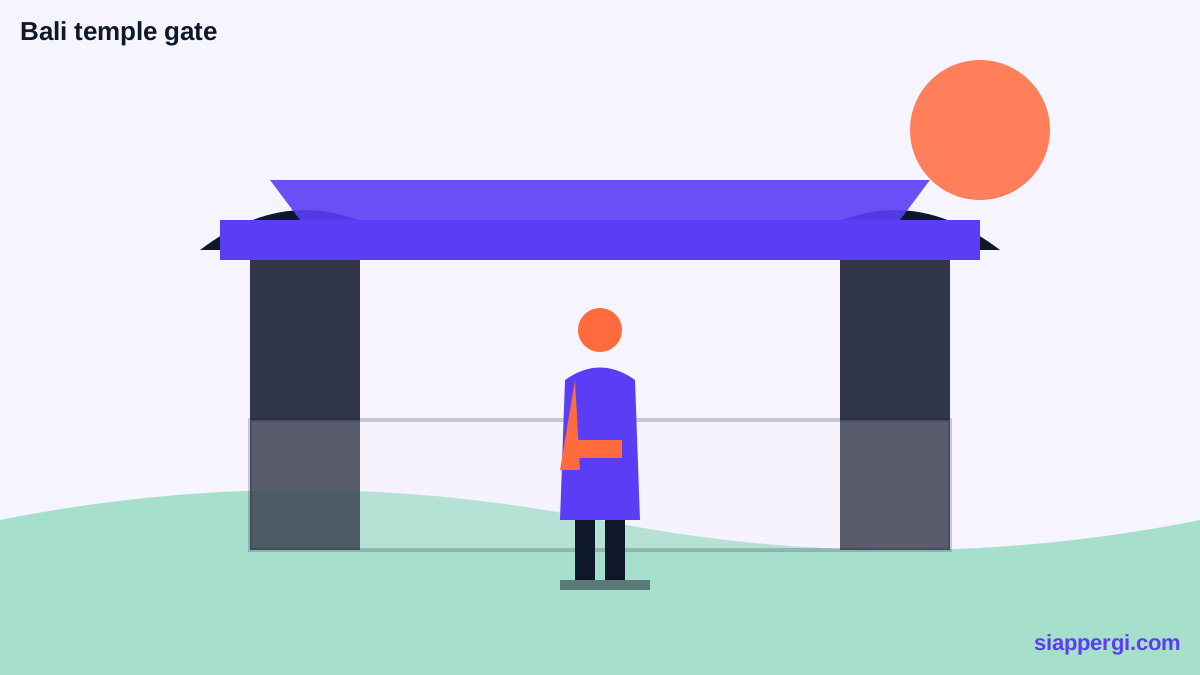
What counts as covered
- Shoulders: a shirt with sleeves, a sarong worn as a wrap, or a light shawl. Tank tops and spaghetti straps are not enough on their own.
- Legs: trousers, a long skirt or a sarong reaching at least to the knee or ankle.
- Footwear: remove shoes before entering the inner courtyard, as at mosques and homes.
- Women: many temples also ask women to avoid visiting while menstruating; check locally if this applies to you.
Sarong and sash: how to wear them
- Wrap the sarong around your waist so it covers your legs to at least the knee.
- Tie the sash (selendang) around your waist over the sarong, knotting it at the front or side.
- For a shoulder cover, drape a shawl or the sash over your shoulders.
- Keep the sarong on for the whole visit, including while walking between shrines.
Many temples rent or lend sarongs at the entrance for a small donation. Carrying your own lightweight sarong avoids queues and gives you a better fit.
Packing a temple-ready bag
| Item | Why it helps |
|---|---|
| Lightweight sarong | Covers legs and works as a shoulder wrap |
| Sash (selendang) | Needed for the traditional look at many temples |
| Long-sleeved light shirt | Covers shoulders in the sun |
| Small cash for donation | Often requested at the gate |
| Slip-on shoes | Easy to remove at the inner courtyard |
Planning a temple day around your transport
Bali's temples are spread across the island, so the day is easier with your own vehicle. SiapPergi delivers scooters and cars to your hotel, villa or Ngurah Rai Airport anywhere in mainland Bali, with delivery included in the price and no deposit. Catalogue prices start from Rp70.000 per day for scooters and Rp310.000 per day for cars, with 2 helmets included with every scooter. You pay in Indonesian Rupiah when the vehicle arrives; your passport is not held. Check the scooter rental and car rental pages for models, and see how to book for the WhatsApp options.
Practical checklist before you go
- Confirm the temple's opening hours and entry fee on arrival; these can change.
- Dress for the heat: covered clothing in light fabrics keeps you cool.
- Check the weather and bring a raincoat if needed; raincoats are available as an add-on from Rp15.000.
- If you plan to ride, carry your licence. Foreign visitors need their home licence plus an International Driving Permit with the motorcycle category; check the official requirements with the Indonesian authorities, as rules can change.
Areas where temple visits are common
If you are based in one of these areas you can often reach a temple in under an hour: Ubud, Canggu, Seminyak, Sanur and Denpasar.
Where to read more
For more on getting around Bali, see the guides section. For a longer drive to northern Bali, compare the Lovina and Amed options.

Quick etiquette reminders
- Do not climb on shrines or sit on temple walls.
- Speak quietly and avoid touching offerings.
- Ask before photographing ceremonies, and keep a respectful distance.
- Follow the instructions of temple staff, as each temple has its own rules.
Ready to rent a scooter or car?
Fixed catalogue prices, delivered to your hotel or villa. Book on WhatsApp and pay when the vehicle arrives.
This guide follows the SiapPergi editorial policy: facts are checked, market prices are given as ranges and mistakes are corrected.