Which Bali Beaches Have Strong Currents?
By the siappergi.com team · Published · 4 min read · Baca dalam Bahasa Indonesia

Many Bali beaches have strong currents, and the most dangerous ones often look calm from the sand. If you are planning where to swim, this guide explains which beaches are known for powerful waves and rip currents, how to spot the warning signs, and how to plan your day around safer water.
Why Bali's beaches can have strong currents
Bali's south and west coasts face the open Indian Ocean. Swells arrive with real force, the seabed often drops away quickly, and tidal changes shift sandbars from day to day. The result is that a beach can be relaxed at 9 a.m. and pulling hard by midday. Rip currents, narrow channels of water flowing back out to sea, are the main hazard, and they are often hidden by a patch of calmer-looking water.
The Indonesian surf and beach authorities, local lifeguard posts and the regency governments set the rules for flags and beach access in each area. Conditions change with the season: the dry season from roughly April to October usually brings bigger swells on the south coast, so always check current signage rather than relying on an old guide.
Beaches known for strong currents
The table below groups popular spots by how much caution they usually need. It is a general guide only; local conditions on the day always win.
| Area | Typical conditions | Suggested approach |
|---|---|---|
| Kuta and Legian | Strong surf on busy days, rip channels near the sandbanks | Swim between flags, avoid the middle of the beach at high tide |
| Uluwatu and Bingin | Powerful reef breaks, cliff-side shorelines | Surf only with local advice; swimming is often not recommended |
| Dreamland and Balangan | Big swells, shifting currents | Experienced surfers only, check the surf report first |
| Nusa Dua | Generally calmer lagoon water inside the reef | Good for families, but stay inside the reef markers |
| Sanur | Shallow reef flats, calmer in the morning | Often the easiest option for a gentle swim |
| Amed and Lovina | Calm on many days, but currents can pick up | Check with locals before entering deeper water |
Note: beach conditions change daily. This table is a planning aid, not a safety guarantee.
How to read the water before you swim
You do not need to be an expert to avoid the worst spots. Use this quick checklist when you arrive:
- Look for red or yellow flags. Read the signs at the beach entrance and follow them.
- Watch the waves for 10 minutes. If sets are breaking hard and close together, stay out.
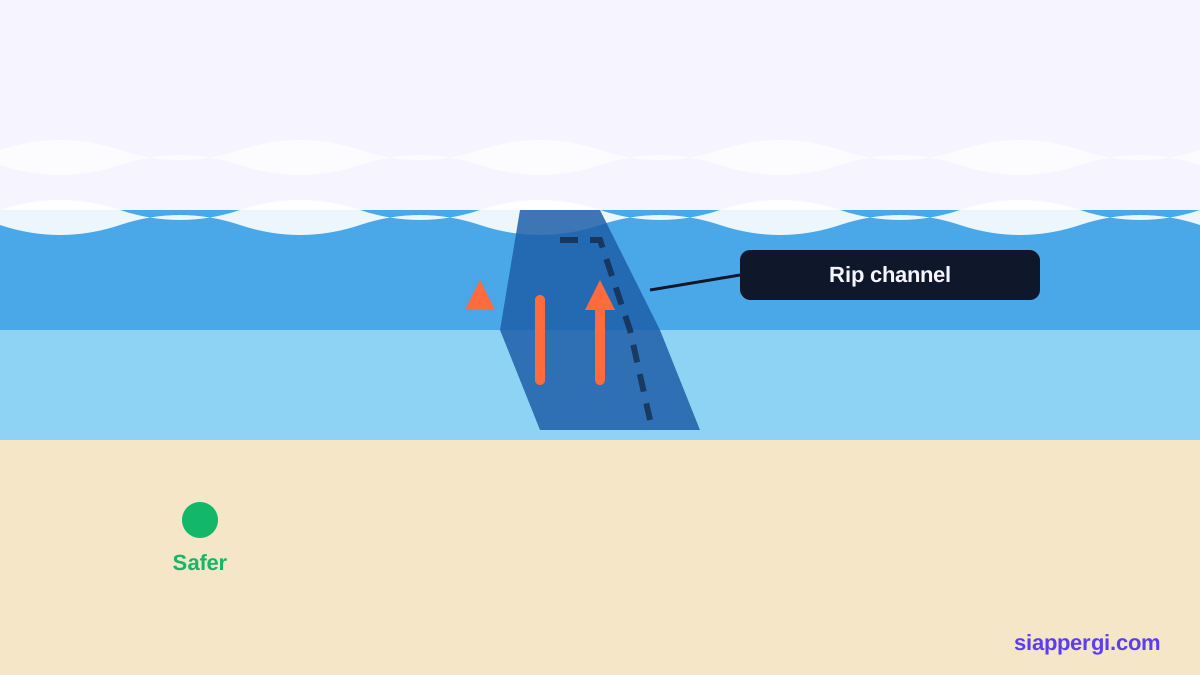
- Look for a rip. Gaps in breaking waves, a channel of darker or churned water, or a line of foam moving seaward are warning signs.
- Ask a local. Warung staff, surf instructors and lifeguards know the day's conditions.
- Choose sheltered water. Lagoons and reef-protected bays are usually the safest for children and weak swimmers.
If you get caught in a rip
- Do not fight the current straight back to shore. Swim parallel to the beach until the pull eases, then head in at an angle.
- Float or tread water and raise one arm to signal for help.
- Tell someone on the sand immediately if you see a swimmer in trouble, and do not go in after them unless you are trained.
Planning your day around safer beaches
Getting to calmer beaches is easier when you have your own transport. SiapPergi delivers scooters and cars anywhere in mainland Bali, including to your hotel, villa or Ngurah Rai Airport, so you can change beaches as conditions change. Delivery and pick-up are included in the price, and there are no hidden fees.
For example, if the south coast is rough, you can ride to scooter rental in Sanur for a morning swim on the calmer reef side, or pick a car rental in Nusa Dua if you are travelling with a group. Guests staying in Seminyak or Canggu can also check the scooter rental in Seminyak and scooter rental in Canggu options.
How SiapPergi helps
SiapPergi's team in Seminyak, Bali, rents scooters from Rp70.000 per day and cars from Rp310.000 per day at fixed catalogue prices, with 2 helmets included with every scooter. There is no deposit and your passport is not held. You pay in Indonesian Rupiah when the vehicle is delivered to you, so you can decide on the day where to go. Book by WhatsApp on +6281808001102 (07.00–23.00 WITA). For more options, see how to book or the Bali scooter rental page.
Note: rules on beach access, flags and lifeguard coverage are set by local authorities and can change. Always check the signs on site.
Ready to rent a scooter or car?
Fixed catalogue prices, delivered to your hotel or villa. Book on WhatsApp and pay when the vehicle arrives.
This guide follows the SiapPergi editorial policy: facts are checked, market prices are given as ranges and mistakes are corrected.